

Teen Patti
India's favourite three-card game: how it is played, the hand rankings, the odds and how the live versions work
- Live house edge 2.5% to 11.37%
- Luck plus bluffing (classic); luck only (live bets)
- Classic: 3 to 6 players, more is possible. Live: many players bet on the same hands, nobody plays a hand
- Classic: a few minutes a hand. Live: commonly under a minute per round
Information only. 18+. In live games the house edge means players lose on average over time. Real-money online gaming is restricted in India.
Overview
Teen Patti, Hindi for 'three cards', is a betting card game from South Asia. Every player gets three cards, bets on whether theirs will be the best hand and the best hand takes the pot. It is the best-known card game in India, the traditional game of Diwali evenings, and it is now also offered as live-dealer table games where the player bets on which of two dealt hands will win.
Teen Patti is played with a standard 52-card deck, no jokers, and usually three to six players, although more can join. Each player is dealt three cards face down. Players put money into a shared pot in turns, either betting blind (without looking at their cards) or seen (after looking), and anyone can fold, called packing, at their turn. The last player in the round, or the holder of the best hand at a showdown, wins the pot. Because the game mixes luck with bluffing, memory of how people bet and reading other players, it is much closer to poker than to a pure chance game like roulette.
According to Wikipedia, Teen Patti originated in India and is popular across South Asia and among the South Asian diaspora. It descends from the English game of three-card brag, with influence from poker, which explains why the hand rankings look familiar. The game is a fixture of Diwali, the festival of lights, when families and friends play for small stakes or just for fun, and it is also known as 'flash' or 'flush' in some regions. The name simply means 'three cards'.
Teen Patti has also moved online. On winzap.vip the live casino lobby lists three Teen Patti tables at the time of writing: Teen Patti Live from Evolution, and One Day Teen Patti and Bet on Teen Patti from Ezugi. These live games are not the same as the game played among friends. In most live versions a dealer deals two or more three-card hands face up and the player does not play a hand at all: the bet is on which hand will win, plus optional side bets. That changes the maths completely, so this page explains both: the classic pot game first, then the live format and its odds.
Everything here is information only. We do not run any game, take any bets or hold any money. Real-money online gaming is restricted in India: please read the legal guide before anything else, and you must be 18 or older.
- Name
- Teen Patti means 'three cards' in Hindi. It is also called flash or flush in some regions
- Origin
- India and South Asia; descended from the English game of three-card brag, with some influence from poker (Wikipedia)
- Cards
- A standard 52-card deck, no jokers, three cards dealt to each player
- Hand ranking (high to low)
- Trail (three of a kind), pure sequence (straight flush), sequence (straight), colour (flush), pair, high card
- All possible three-card hands
- 22,100: trail 52 (0.24%), pure sequence 48 (0.22%), sequence 720 (3.26%), colour 1,096 (4.96%), pair 3,744 (16.94%), high card 16,440 (74.39%)
- Why trail beats pure sequence
- Pure sequences are slightly rarer (48 against 52 combinations) yet rank below a trail, a quirk of the traditional order
- Classic game
- Players ante into a pot, bet blind or seen, fold (pack) or raise, and the best hand or the last player standing wins the pot
- Live-dealer game
- Usually Player A against Player B: you bet on which hand wins, with side bets. Main bets carry a house edge of about 2.50% in the published 20-20 paytable
- Chance both live hands tie
- 0.1106% of rounds (450,528 of 407,170,400 ordered two-hand deals, about 1 in 904), ties judged on rank, suits ignored
- On winzap.vip
- Teen Patti Live (Evolution), One Day Teen Patti (Ezugi) and Bet on Teen Patti (Ezugi) in the live casino lobby
How to play Teen Patti
Classic Teen Patti among friends
- 1Gather three or more players and a standard 52-card deck with the jokers removed. Agree the stakes first, and agree whether you are playing for money at all: many families play for fun or with small tokens.
- 2Every player puts the same small starting amount, the boot or ante, into the middle. That is the first money in the pot, so there is always something to win.
- 3The dealer shuffles and deals three cards face down to each player, one at a time, going clockwise. Players keep the cards face down until they choose to look.
- 4Betting starts with the player to the dealer's left and moves clockwise. At your turn you can play blind (bet without looking at your cards), play seen (look at your cards, then bet), or fold.
- 5A blind player pays the current stake, and may raise it. A seen player must pay at least double the current stake. Most tables also set a maximum bet or a pot limit before the game begins.
- 6The amount you put in is called a chaal. Each chaal goes into the pot. To fold, called packing, you put your cards face down and lose everything you have already staked.
- 7A seen player may ask the seen player just before them for a side show. The two privately compare their cards and the lower hand must pack. If the hands match, the player who asked for the side show packs. Players may refuse a side show in some house rules.
- 8When only two players are left, either one may ask for a show by paying the stake. Both hands are turned face up and compared. The higher hand wins; if the hands are exactly equal, the player who asked for the show loses in most rules, and the pot is shared in others.
- 9If every other player packs, the last player wins the pot without showing a hand. That is why bluffing, betting boldly with a weak hand, is a real part of the game.
- 10The winner collects the pot, the deal passes to the left and a new round starts with a fresh ante.
Live Teen Patti on screen (Player A / Player B style)
- 1Open the live table and check the minimum and maximum bets, the paytable and the tie rule shown in the game. They differ between providers.
- 2While the betting window is open, place chips on Player A, Player B or both, and on any side bets such as Pair Plus or Tie. You do not hold or play a hand yourself.
- 3When the betting window closes the dealer deals three face-up cards to each hand. The two hands are placed in their categories: trail, pure sequence, sequence, colour, pair or high card.
- 4The higher category wins. If both hands are in the same category, the card ranks decide, comparing the highest card first. If both hands are exactly equal, the main bets usually push and a Tie bet pays.
- 5The game settles every bet at once, a winning main bet is paid at the listed odds and a new round starts with a freshly shuffled deck. Earlier rounds have no effect on the next one.
Rules
- A standard 52-card deck is used, with no jokers, unless a Joker or wild-card variant has been agreed. Every player receives three cards.
- Hand categories from highest to lowest: trail (three of a kind), pure sequence (three consecutive cards of the same suit), sequence (three consecutive cards of mixed suits), colour (three cards of the same suit that are not in sequence), pair, high card.
- A hand in a higher category always beats a hand in a lower category. Within a category, the higher cards win, comparing the highest card first, then the next, then the last.
- Trails are ranked by the card: three aces are the best hand in the game and three twos are the lowest trail.
- Aces rank high. In the most common rules A-K-Q is the best sequence, A-2-3 is the second best, K-Q-J is third and 4-3-2 is the lowest. K-A-2 is not a sequence. Check how the table you play at treats A-2-3.
- Suits have no rank in most rules. Two hands of the same category and the same card ranks are equal, whatever their suits.
- In the classic game every player antes the same boot amount, and betting runs clockwise with the right to fold (pack) at your turn.
- A blind player bets the current stake; a seen player bets at least double the current stake. The table agrees a maximum bet or pot limit in advance.
- A show can be asked for when two players remain. A side show is a private comparison between two seen players, and the player with the lower hand packs.
- If two hands are exactly equal at a show, the player who asked for the show loses in most rules. Some groups split the pot instead, so agree this before dealing.
- In live-dealer games a player bets on Player A, Player B or a side bet and plays no hand. The hand rankings are the same, but the payouts, commission, tie rule and any Joker rules are set by the provider.
- Rules for stakes, limits and variants are set by the group in a home game, or by the provider in a live game. Always read them before you play.
Live game: bets, payouts & house edge
| Bet | Pays | House edge | Notes |
|---|---|---|---|
| Player A or Player B (live 20-20 format) | 0.95 to 1 (1.95 total return per 1 staked) | 2.50% | Each hand wins 49.94% of rounds; ties (0.11%) push. The edge is 2.50% per resolved bet, 2.497% per unit staked |
| Tie | 800 to 1 | 11.37% | Hits in 450,528 of 407,170,400 deals (0.1106%, about 1 in 904) |
| Pair Plus (any qualifying hand) | 1 to 1 up to 50 to 1 | 6.91% | Pays on a pair or better in 5,660 of 22,100 hands (25.61%); one bet per hand |
| Pair Plus: three aces | 50 to 1 | 6.91% (whole bet) | 4 of 22,100 hands (0.018%, about 1 in 5,525) |
| Pair Plus: other trail (three of a kind) | 40 to 1 | 6.91% (whole bet) | 48 of 22,100 hands (0.217%, about 1 in 460) |
| Pair Plus: pure sequence | 30 to 1 | 6.91% (whole bet) | 48 of 22,100 hands (0.217%, about 1 in 460) |
| Pair Plus: sequence | 6 to 1 | 6.91% (whole bet) | 720 of 22,100 hands (3.26%, about 1 in 31) |
| Pair Plus: colour | 3 to 1 | 6.91% (whole bet) | 1,096 of 22,100 hands (4.96%, about 1 in 20) |
| Pair Plus: pair | 1 to 1 | 6.91% (whole bet) | 3,744 of 22,100 hands (16.94%, about 1 in 6) |
| 6 Card Bonus | 7 to 1 up to 1000 to 1 | 8.56% | Pays on three of a kind or better in 1,482,064 of 20,358,520 six-card hands (7.28%) |
Payouts, commissions and side bets differ between providers and casinos. Always read the rules shown at the table or in the game before anything else. Playing among friends has no house, so none of this applies there.
How these numbers are worked out
These figures describe the live 20-20 format only. In the classic game among friends there is no house, so there is no house edge: what one player wins, the others lose. Paytable source: the published 20-20 rules reported by an independent analysis site (Player A/B 0.95 to 1 with ties pushing; Pair Plus 50/40/30/6/3/1 to 1; Tie 800 to 1; 6 Card Bonus 1000/200/100/20/15/10/7 to 1 for royal flush, straight flush, four of a kind, full house, flush, straight, three of a kind). All edges were recomputed by script. Player A/B: because the two hands are interchangeable, each wins (1 - P(tie)) / 2 of rounds, so the edge per resolved bet is (1 - 0.95) / 2 = 2.50%; per unit staked, counting pushes, it is 2.497%. Tie: enumeration of all 407,170,400 ordered pairs of non-overlapping hands, treating hands as tied when category and card ranks match (suits ignored), gives 0.1106%, an edge of 800 x 0.001106 - (1 - 0.001106) = -11.37%. Pair Plus: expected return (4 x 50 + 48 x 40 + 48 x 30 + 720 x 6 + 1,096 x 3 + 3,744 x 1 - 16,440) / 22,100 = -6.91%. 6 Card Bonus: enumeration of all 20,358,520 six-card hands, taking the best five-card poker hand, gives an edge of 8.56%. The three tables listed on winzap.vip (Teen Patti Live, One Day Teen Patti, Bet on Teen Patti) may use different paytables, so no edge is claimed for them: read the rules inside each game.
Tips for playing sensibly
Learn the hand ranking until it is automatic. Only about one hand in four is a pair or better (25.61%), and three quarters of all hands are just a high card, so a pair is already a good hand.
In the classic game the real skill is in reading people: who bets fast, who hesitates, who suddenly plays seen. Watching how others bet tells you more than your own cards.
Fold a weak hand early. Money you have already put in the pot is gone, and chasing it with a high card hand is the commonest way to lose.
Bluff rarely and with a plan. A bluff works because other players believe your story; a table that sees you bluff all the time stops believing it.
Agree house rules before the first deal: the ante, the maximum bet, whether side shows can be refused, how A-2-3 ranks and what happens on an exact tie. Most arguments come from rules nobody said out loud.
In live-dealer games, know that the main bets carry a house edge of about 2.50% and the side bets are higher, 6.91% to 11.37% in the published 20-20 paytable. Over time the player loses on average and no betting pattern changes that.
The Tie bet pays 800 to 1 but hits only about once in 904 rounds. High payouts on rare outcomes carry the largest edge, not the smallest.
Set a time limit and a money limit before you start, and only use money you can afford to lose. Never raise bets to win back losses. If gambling stops being fun, stop and talk to someone.
Common myths
Myth Teen Patti is purely a game of luck.
Truth The deal is luck, but in the classic game the decisions to bet, fold or bluff and the reading of other players decide who wins over many hands. Live Player A / Player B bets are luck only.
Myth After Player B has won several rounds in a live game, Player A is due.
Truth Each round is dealt from a freshly shuffled deck. The chance that either hand wins is the same every time; expecting a correction is the gambler's fallacy.
Myth A pure sequence must beat a trail because it is rarer.
Truth Pure sequences are slightly rarer (48 of 22,100 against 52), but the traditional order ranks a trail higher. Ranking does not always follow rarity.
Myth The Tie bet is a bargain because it pays 800 to 1.
Truth A tie happens about once in 904 deals, so the fair payout would be about 903 to 1. The 800 to 1 payout leaves an edge of about 11.37%, the largest of the bets.
Myth Playing blind is always the cheaper way to play.
Truth A blind player bets less per turn, but plays without information. Over a long hand a blind player can lose more by staying in with a weak hand they have never seen.
Variants
Joker (wild card) Teen Patti
One or more cards act as wild cards. A joker may be added to the deck or a random rank may be named wild before the deal. Strong hands become much more common, so the bar for a good hand rises.
Muflis (lowball)
The ranking is turned upside down: the lowest hand wins. The best hand is 2-3-5 of mixed suits, and a trail is the worst hand. Rules differ on whether A-2-3 counts as a sequence.
AK47
All aces, kings, fours and sevens are wild cards, so most hands contain one or more wild cards. Very high-ranking hands are common.
Best of four
Each player gets four cards and makes the best three-card hand from them. The extra card makes strong hands more common.
Teen Patti 20-20 (live)
Two three-card hands, Player A and Player B, are dealt face up and bettors choose which hand wins, with side bets such as Pair Plus, Tie and 6 Card Bonus in the published paytable.
Ante and play against the dealer
A casino format in which the player antes, looks at three cards and either folds or raises against a dealer hand. It is a different game with different odds.
Glossary
- Boot
- The starting amount every player puts into the pot before the cards are dealt. Also called the ante.
- Blind
- Playing a hand without looking at your cards. A blind player bets less than a seen player.
- Seen
- A player who has looked at their cards. A seen player must bet at least double the current stake.
- Chaal
- A bet, or a turn to bet. Playing chaal means matching the stake and staying in the hand.
- Pack
- To fold. The player puts their cards face down and gives up everything staked so far.
- Show
- When only two players remain, one pays to turn both hands over. The higher hand wins the pot.
- Side show
- A private comparison of cards between two seen players. The lower hand has to pack.
- Pot
- All the money staked in the hand. The winner takes it.
- Trail
- Three cards of the same rank, also called a set or three of a kind. 52 of 22,100 three-card hands (0.24%). The top category; three aces are the highest.
- Pure sequence
- Three consecutive cards of the same suit, a straight flush. 48 of 22,100 hands (0.22%), ranked below a trail even though it is slightly rarer.
- Sequence
- Three consecutive cards that are not all the same suit, a straight or run. 720 of 22,100 hands (3.26%).
- Colour
- Three cards of the same suit that are not in sequence, a flush. 1,096 of 22,100 hands (4.96%).
- Pair
- Two cards of the same rank plus one other card. 3,744 of 22,100 hands (16.94%).
- High card
- A hand with none of the above, ranked by its highest card, then the next highest. 16,440 of 22,100 hands (74.39%).
- Joker (wild card)
- A card that can stand in for any card the holder needs. Common home versions add jokers or nominate a random rank as wild; live-game rules vary by provider.
- Pair Plus
- A live-game side bet on the strength of one hand. It pays fixed odds if that hand is a pair or better, whether or not it wins the round.
- Tie bet
- A live-game side bet that wins if both hands rank exactly the same. Reported at 800 to 1 in the published 20-20 paytable.
- Push
- A bet that is returned unchanged. On the main live bets, a tie is a push.
- House edge
- The average share of each stake the casino keeps over many rounds. Only live-dealer games have one; a game among friends has none.
Teen Patti FAQ
What is Teen Patti?
Teen Patti means 'three cards' in Hindi. It is a betting card game from South Asia in which each player gets three cards, bets on their hand and the best hand wins the pot. It is a traditional Diwali game in India and is also offered as live-dealer casino games.
What is the order of hands?
From highest to lowest: trail (three of a kind), pure sequence (straight flush), sequence (straight), colour (flush), pair and high card. A trail outranks a pure sequence even though pure sequences are slightly rarer, 48 combinations against 52.
What is the difference between blind and seen?
A blind player has not looked at their cards and bets the current stake. A seen player has looked and must bet at least double the current stake. A blind player can switch to seen at any turn.
What are the best starting hands?
Only about one in four hands is a pair or better. A pair of any rank is above average, a colour or sequence is strong and a trail or pure sequence is very rare: about one hand in 425 is a trail and about one in 460 is a pure sequence. A hand with only a high card is the most common (74.39%) and should usually be folded to a big bet.
Is Teen Patti a game of luck or skill?
The cards dealt are down to luck. In the classic game, skill comes from deciding when to bet, bluff or fold, and reading other players, which is why it plays like poker. In live-dealer Player A / Player B games there are no decisions after the bet is placed, so the result is luck only.
What is a house edge in Teen Patti?
In a classic game among friends there is no house, so no house edge: one player's win is the others' loss. In live-dealer games the main Player A and Player B bets pay 0.95 to 1 in the published 20-20 paytable, giving a house edge of about 2.50%. Pair Plus is about 6.91%, the 6 Card Bonus about 8.56% and the Tie bet about 11.37%.
Which Teen Patti games are listed on winzap.vip?
At the time of writing the live casino lobby of winzap.vip lists Teen Patti Live from Evolution, and One Day Teen Patti and Bet on Teen Patti from Ezugi, among its live games. Their exact rules and paytables are set by the providers and are shown inside each game.
Is real-money Teen Patti legal in India?
Playing for money is gambling, which is restricted across India, and the Promotion and Regulation of Online Gaming Act, 2025 prohibits online money games. Playing for no stakes with friends is different. This site is information only and is not legal advice: read our legal guide and check the law where you live.
Does a Joker change the odds?
A wild Joker lets a hand take the best form it can, so strong hands become more common and high card hands become rarer. As an illustration, adding one fully wild Joker to a 52-card deck lifts a pair or better from 25.61% to 29.82% of hands and trails from 0.24% to 0.55%. Real Joker games vary by provider.
Can a strategy beat the live game?
No. After a live bet is placed the cards are dealt from a shuffled deck and the player makes no further decision. The house edge applies to every bet, and no betting pattern changes the odds.
Related reading

Is Teen Patti legal in India? What the law says and what it does not
A plain-English overview of how Indian law treats card games for money, the 2025 online gaming Act and why you should check the rules where you live.
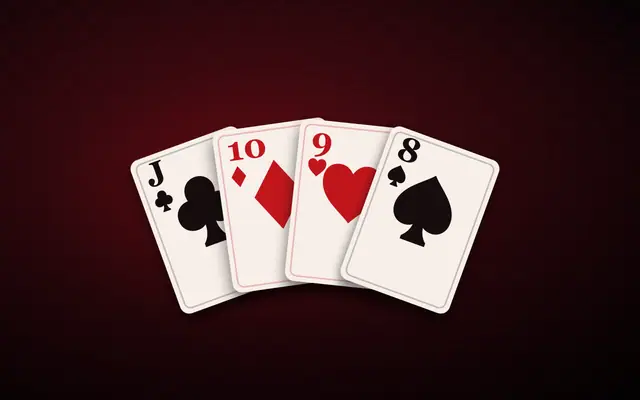
How to play Teen Patti: a step-by-step guide for beginners
Everything you need to sit down at a Teen Patti table: the cards, the boot, blind and seen play, how betting works and how a hand ends.
Teen Patti hand rankings and the odds of every hand
The six Teen Patti hands from best to worst, with how many of the 22,100 possible hands fall in each category and how often you will see them.
winzap.vip
Teen Patti on winzap.vip
Winzap Asia is related to winzap.vip. At the time of writing its live casino lobby lists these three Teen Patti tables. The pictures are taken from that lobby.

Teen Patti Live
EvolutionA live-dealer Teen Patti table from Evolution.

One Day Teen Patti
EzugiA live-dealer Teen Patti table from Ezugi.

Bet on Teen Patti
EzugiA live-dealer Teen Patti table from Ezugi.
Information only: Winzap Asia does not offer these games, take bets or hold money. The rules, paytable and limits of each table are set by its provider and shown inside the game, so check them there. Not sure how live Teen Patti differs from the game among friends? Read live vs classic Teen Patti. 18+ only; real-money online gaming is restricted in India, see our legal guide.